About. . .

This website is meant for family historians. Readers will find information about how people and communities were impacted by natural phenomena – or Mother Nature. Blog posts will present examples of actual events and how families coped with them. Links will be added to websites and articles that may assist genealogists looking for specific data about certain areas.

Thursday, May 23, 2019

Article in Going In-Depth: New Madrid Earthquakes


Read my latest article, Families in Peril: The New Madrid Earthquakes of 1811-12, in Going In-Depth magazine, published by The In-Depth Genealogist.

In the article I discuss the disaster that impacted people and communities in Arkansas, Kentucky and Missouri between December 1811 and February 1812. Property damage was severe. Many families were forced to abandon their homes which were inundated by the Mississippi River waters as channels were shifted and flood-waters inundated farms and towns.


You can subscribe to Going In-Depth or purchase back-issues here.

Tuesday, April 9, 2019

Changing Landscapes

Read my recent article about natural phenomena and family history, in this case coastal margins, in the latest, April 2019 issue of Discover Your Ancestors periodical. In it you will learn about new lands were created along an major estuary in East Yorkshire, England, on which several families established farms.

The title of the article is Changing landscapes.


You can subscribe to the publication directly here.

Wednesday, April 3, 2019

Mother Nature at her Worst


We hear a lot these days, thanks to TV and the Internet, about major natural disasters. Each one is portrayed as the “worst” or “biggest” or “most deadly” event ever to have been experienced. Most often the comments come from those who were closest to where the events occurred. The sentiments are, of course, subjective, based on a limited level of knowledge of natural history and a result of the anxiety of how people are so negatively impacted.

Having said that, there have indeed been many events in recorded history that were decidedly deadly and widely damaging. Following are just a few of the worst. I will follow up, in a later post, with a summary of the most positive natural developments and changes, so readers may realize that Mother Nature is not always malicious.

The worst and, to humans, deadliest natural events span history. Contrary to modern news reports, they are not confined to recent years or decades or to any particular region. There have been some notable ones in the 21st century, but then those are the ones we are most familiar with and that have been imprinted on our collective memories through detailed news reports. Incomplete records mean that we cannot measure the effects of those that happened more than a few hundred years ago. In geologic time, we can only look at the sedimentary strata to see what devastation might have occurred, during times of early man or before humans walked the Earth.

Following are some examples we know about from actual records:

Flooding

The deadliest flood occurred in China in 1931. Drought conditions had persisted between 1928 to 1930. Substantial snowfall arrived during the harsh winter of 1931-31. The spring melt was accompanied by torrential rain storms resulted in widespread flooding of the Yangtze River valley. Extreme cyclonic activity (nine separate storms) occurred during the summer season, offering no respite from the exceptional inundation.

Up to 50 million people were affected; crop loss was significant; homes and farms were destroyed. Following on the physical devastation was the spread of diseases including: cholera, measles, malaria, dysentery and schistosomiasis (caused by parasitic flatworms). Estimates of deaths, realizing that records were sparse and government reports were probably intentionally conservative, range from one to four million people.


Earthquakes

Earthquakes are the most dangerous and deadly of Mother Nature’s tricks. Commonly thousands of people are affected and killed by such events around the world.

China was also the site of what is believed to be the greatest earthquake death toll. It has been estimated that over 830,000 people were killed in a tremor near Shaanzi in 1556. What makes these kinds of events particularly deadly is when they occur in densely-populated areas. Tectonic shifts of the Earth’s crust are part of the planet’s entire geologic record. They are considered disasters only if people are impacted.

The epicentre was near the cities of Huaxian, Weinan and Huayin where almost every building was destroyed and tens of thousands died. Damage and death were experienced over 300 miles away.

The area of the 1556 and other events is under extensional stress, bounded by major normal faults. When activated (often), large blocks are vertically-displaced with accompanying opening of fissures and production of landslides in surrounding highlands.


Storms

Major storms are frequent and can be devastating when they come ashore near populated areas. They have not increased in number or intensity over the centuries during which they have been reported, but as people and communities have grown in number so have the destruction and death tolls. Invariably, undeveloped regions with large numbers of poor neighbourhoods suffer the greatest.

On 7 October 1737, one of the deadliest cyclones struck Calcutta, India, killing an estimated, though unconfirmed, 300,000 people. A representative of the British East India Company, stationed there, reported on the damage in that city. Others wrote that storm surges destroyed 20,000 ships in the harbor.

In another time, and in another part of the world, a 1703 storm crossed southern England, causing significant damage. Daniel Dafoe, in his definitive book, The Storm, described the effects thusly:
·         wind gusts possibly topping 120 mph at the peak of the storm, levelling almost everything in its path
·         over 700 ships wrecked while docked or at anchor in harbours around southern England and while still at sea, with an estimated death toll of up to 10,000 sailors
·         thirteen Royal Navy warships sunk, with the loss of over 1,500 lives; many others severely damaged
·         over 120 lives lost, and hundreds more injured on land across England and Wales
·         significant damage in towns and cities – in London over 2,000 chimney stacks blown down, demolishing parts of the houses to which they had been attached
·         tens of thousands of head of cattle and sheep lost on farms along the storm’s path
·         major parts of forests levelled
·         areas around major estuaries impacted by floods from storm surges, in many cases more dangerous than the accompanying winds
·         severe disruption to local economies just emerging from decades of recession, the effects of which felt for years afterward
·         mercantile shipping, involving fleets serving major cities like London and the export markets, disrupted for many years until replacement ships could be put to sea
·         immediate inflation of prices in foodstuffs and other goods – building materials in particular


This event was singularly important as it hit a populated and advanced (for the time) economic centre of Europe. Dafoe’s report lists the many communities and people affected by the disaster.

Disease and Epidemics

We understand how diseases can decimate communities. Epidemics have raged in regions around the world, many spread by Europeans to unsuspecting and ill-prepared indigenous groups during the age of explorations and colonization during the 16th to 19th centuries.

No example is more illustrative of the potential for death, though, that the Black Death that spread over Europe in the 14th century. Between 1346 and 1352, the plague moved from the central Asia, to the Mediterranean trading ports and then across the continent to Scandinavia and the British Isles.

An estimated 75 to 200 million people died, representing from 30% to 60% of Europe’s population.

Other diseases have made their way through the human population over the centuries, some of which we have better information as to their consequences:
·         Since its recognition in the 17th century (it is believed to have originated several thousand years earlier), small pox has killed hundreds of millions of people around the world.
·         Measles has resulted in the deaths of at least 200 million people just during the last 150 years
·         Malaria has taken the lives of probably 250 million since the beginning of the 20th century.
·         The Spanish Flu arrived in 1918 in America and Europe, killing from 50 to 100 million worldwide.
·         Tuberculosis, also known as consumption or phthisis, killed over 1 billion people in the 19th and 20th centuries

Until the advent of vaccines, and better health care techniques, many of these and other diseases continued their relentless attack on communities everywhere.


Volcanoes

While not common as direct killers, other than adjacent to locations of eruptions, volcanoes have had an effect of health, weather, agriculture and general climate. Some of the most violent and deadly eruptions were:
·         Mt. Tambora in 1815 which killed up to 120,000 people and affected weather and climate around the world for several years.
·         Krakatau, in 1883, had similar effects on global climate, and killed over 30,000 people in nearby areas to the eruption.
·         Laki fissure, in Iceland, erupted in 1783, sending a pall of ash and gas over most of Europe, causing crops losses, illness and death.
·         Mt. Pelee, in the Caribbean, exploded in 1902, destroying the city of St. Pierre, killing all but two of the 28,000 inhabitants.


Eruptions continue to occur with regularity along the active tectonic plate margins of the Earth’s crust. Accompanying them are devastating earthquakes and the spread of ash and gas high into the atmosphere. Mother Nature never rests in her quest to alter the surface of the globe and spread fear and death.

Saturday, March 16, 2019

Genealogy and the Little Ice Age Presentation

Are you, or is your local group interested in learning more about how people fared during the Little Ice Age. You can download my presentation titled, Genealogy and the Little Ice Age from Legacy Family Tree Webinars.


The introduction reads:

As genealogists we seek information about our ancestors from as far back in time as possible. That being said, not all researchers may be familiar with the term, but some of the most important records we find were created during the time of the Little Ice Age.

The Little Ice Age was a climatic period that lasted from about AD 1300 to 1850, a time in history when, from a physical or environmental standpoint, in comparison to the warm periods that preceded and followed it, was characterized by:
·         substantially cooler temperatures around the globe
·         mostly unstable weather
·         more frequent and intense storms
·         especially challenging food production
·         harsh living conditions
All of these factors had enormous impact on the lives and livelihoods of people and contributed to famine, spread of disease, social unrest, injury to being and habitat, and, in some cases, migration.

Summarizing of vital data began in earnest during this time. Apart from purely religious reasons or to establish hereditary claims, it may have been instituted in response to the need for more accurate rolls for churches and governments in identifying individuals from whom they could raise funds to support expanded social programs – parish relief efforts, poor laws and workhouses – involving the care of their citizens, more of whom fell into dire straits as the Little Ice Age progressed.

Because the Little Ice Age is the time frame that most coincides with genealogical research, it is important to understand the physical conditions under which people lived in order to assemble the most complete histories of families.

This presentation will hopefully bring perspective to the study of the generations of families who lived through the time of the Little Ice Age.

This was presented as part of the Unlock the Past - Seattle seminar on September 6, 2018.

50 minutes. The recording is also included as part of the monthly or annual membership.


Tuesday, March 5, 2019

Drought During the Establishment of Early American Colonies


I wrote about droughts in general in a post on my Discover Genealogy blog on 29 May 2017: Natural Disasters and Family Misfortunes 3: Droughts. Some of those comments are repeated here.

Drought is basically a condition where there is a lack of water resources. According to researchers Gwyneth Cole and Terry Marsh (2006), of the Centre for Ecology and Hydrology in Oxfordshire, droughts may be caused be due to a deficiency of rainfall (meteorological drought), accumulated deficiencies in runoff or aquifer charge (hydrological drought) or limited water present in the soil during the growing season (agricultural drought). The primary parameters of a drought, though, are a lack of precipitation over an extended period and affecting a large area.

Droughts have been part of natural events for millions of years in all parts of the world. With regard to human history, both recorded and ancient, droughts have played a significant role in the destruction of communities – even whole societies.

A long-lasting drought probably had a major impact on the outcome of the early American colonies. In 1585 new settlers came to Roanoke Island, in what is now Virginia, to begin a new life.

According to a 1998 study, The Lost Colony and Jamestown Drought (Stahle, et at, 1998) the years of 1587-89 saw the region experience a major drought. The authors state that “Tree-ring data from Virginia indicate that the Lost Colony of Roanoke Island disappeared during the most extreme drought in 800 years (1587-1589) and that the alarming mortality and the near abandonment of Jamestown Colony occurred during the driest 7-year episode in 770 years (1606-1612). These extraordinary droughts can now be implicated in the fate of the Lost Colony and in the appalling death rate during the early occupations at Jamestown, the first permanent English settlement in America.”


Data collected from tree-rings and population and immigration estimates in the region strongly suggest that mortality rates rose with increasing aridity (drought index). The new settlers in America had the greatest bad luck to arrive at a time when drought was widespread and possibly the worst it had been in centuries. Even considering threats from other sources, such as the potential conflict with the native population, it is no wonder the colonies failed.

This episode was not the first nor the last major drought to affect America, including on both indigenous people and new settlers:

·         The Terminal Classic Drought coincided with the demise of the Mayan civilization between AD 750 and 1050 (Gill, 2000).
·         Between AD 990 and 1300 there were three intense and persistent droughts in the central and southwest part of the US, each lasting several decades. They all had severe impacts on natives that resulted in migration of the people and even collapse of their cultures (Jones et al, 1999).
·         The Civil War Drought (1856-1865) has been considered the most severe in more modern times, possibly rivalling that of the Medieval period (AD 750-1300). Other disastrous droughts occurred in the 1870s and 1890s. http://ocp.ldeo.columbia.edu/res/div/ocp/drought/nineteenth.shtml

Family historians may come across evidence that such natural phenomena have affected their own families, at different times and in different regions. Sometimes short-lived and sometimes over extended time periods, drought can and did have devastating impacts on living conditions.

References:

Cole, G. A. & Marsh, T. J. (2006). An historical analysis of drought in England and Wales. In Climate Variability and Change – Hydrological Impacts (Demuth, S., Gustard, A., Planos, E., Scatena, F. & Servat, E., Eds.). International Association of Hydrological Sciences, publication number 308, pp. 483-489.

Gill, R. B. (2000). The Great Maya Droughts: Water, Life, and Death. University of New Mexico.

Jones, T. L., Brown, G. M., Raab, L. M., McVickar, J. L., Spaulding, W. G., Kennett, D. J., York, A. & Walker, P. L. (1999). Environmental Imperatives Reconsidered: Demographic Crises in Western North America during the Medieval Climatic Anomaly. Current Anthropology, (40/3), pp. 137-170. http://cola.calpoly.edu/~tljones/Jones%20et%20al%201999.pdf

Stahle, David W., Malcolm K. Cleaveland, Dennis B. Blanton, Matthew D. Therrell & David A. Gay. (1998). The Lost colony and Jamestown Droughts. Science, volume 280, 24 April, pp. 564-567.


Tuesday, February 19, 2019

Natural Disasters and Family Misfortunes: Volcanoes, Part 2


I wrote about the impact of volcanoes in a Discover Genealogy blog post on 17 October 2017, titled Natural Disasters and Family Misfortunes 8: Volcanoes. This is Volcanoes, Part 2.

If you could trace back your family to AD 79 in southern Italy, you might have had ancestors who escaped or were killed by the eruption of Vesuvius. If you have family members living on the big island in Hawaii, they may have lost their homes in the recent eruption of Kilauea.

Your ancestors did not have to live on the edge of volcanoes, though, to have been affected. The 1815 eruption of Tambora in Indonesia affected almost every part of the world, causing the Year Without Summer. The 1883 eruption of Krakatau, also in the Indonesian Archipelago, had similar effects on the world as ash and gases blanketed the Earth, shutting out the sun for long periods and precipitating noxious rainfall that hampered crop growth. Climatic patterns were disrupted for years.

These problems paled in comparison to the instant deaths of tens of thousands nearer to the volcanoes who died from the explosions, burial by debris or tsunamis which swept across coastal regions around the Pacific Ocean.

Closer to Europe, ash and gases released by the Laki fissure in Iceland in 1783 had some serious deleterious effects on people across Europe.
 
Map of Iceland and Europe showing the main path of ash and volcanic gases from the 1783 Laki eruption


In more recent times, an eruption, again in Iceland of the Eyjafjallajokull volcano caused major disruption to air travel and affected air quality over a large area.
 
Overlooking the Eyjafjallajökull glacier and the ongoing volcano eruption from Hvolsvöllur on April 17th, 2010; author Henrik Thorburn; used under Creative Commons License 3.0; downloaded 19 February 2019 from https://commons.wikimedia.org/wiki/File:Eyjafjallajokull_volcano_plume_2010_04_17.jpg
Composite map showing the position of the Icelandic volcanic ash cloud that closed European air space in different days; used under Creative Commons License 3.0; downloaded 19 February 2019 from https://commons.wikimedia.org/wiki/File:Eyjafjallaj%C3%B6kull_volcanic_ash_composite.png. Based on maps found at http://www.metoffice.gov.uk/aviation/vaac/vaacuk_vag.html

This was but a minor eruption in the grand scheme of things but gives us a good idea of what effects volcanoes can have on people’s lives and community activities.

Recently a report was issued by the United States Geological Survey concerning the current threat from volcanic activity in the USA. I thought it might be of interest to update readers on the potential for disasters of this type.


You can read and download the report here. https://pubs.er.usgs.gov/publication/sir20185140  

Most of us do not live near active volcanoes so have little to fear from their eruptions. In fact, most of our ancestors did not live close to them either and, other than from gases and ash carried thousands of miles to where they did live, people had little to be concerned about.

But volcanoes can obviously be highly destructive.

The report says that, “The United States is one of Earth’s most volcanically active countries, having within its territory more than 10 percent of the known active and potentially active volcanoes. . .  Since 1980, there have been 120 eruptions and 52 episodes of notable volcanic unrest (increased seismicity, observed ground deformation, and (or) gas emission) at 44 U.S. volcanoes.”

Now, granted, most of them have been dormant for a long time or are in locations far removed from significant population centres. The threat assessment is based “on objective measures of volcano hazards and exposure of people and infrastructure to those hazards.” One of the most active is in Hawaii which heads the list of very high-threat volcanoes. We have all seen the videos of the latest eruption at the lower east rift zone of Kilauea-Puʻu ʻŌʻō which has destroyed dozens of homes in Leilani Estates. The future of the subdivision is in question.

Helicopter overflight of Kīlauea Volcano's lower East Rift zone on 19 May 2018, around 8:18 AM, HST. ‘A‘ā lava flows emerging from the elongated fissure 16-20 form channels. The flow direction in this picture is from upper center to the lower left; source United States Geological Survey https://hvo.wr.usgs.gov/multimedia/uploads/multimediaFile-2062.jpg

A surprising number of the more dangerous volcanoes are along the west coast of the continental US. Eleven of the 18 locations labelled as high risk are in Washington, Oregon and California. Several others in the region have moderate to high risk. The western edge of the North American continent is, of course, an active region for earthquakes (another potential threat to lives) and volcanism, extending from Mexico to Alaska.

From the viewpoint of genealogy, volcanic eruptions of the past have been the cause of thousands of direct deaths, changes or alterations of weather and climate that resulted in famine, death or displacement and major migration of people facing threats to their lives or livelihoods. The modern world provides no exceptions to these threats although we do have systems in place to forewarn of eruptions, allowing people to get out of the way. Notwithstanding the warning systems in place, we have seen in recent years the potential harm to health and transportation of significant eruptions.

Did your ancestors get sick or die during one of these events?

Monday, February 18, 2019

The History of Old Occupations

I have a new article in the latest (March 2019) issue of Family Tree magazine (UK). 

In it I discuss the development of different occupations and industries from the Middle Ages onward, related, of course, to what was going on with climate (more than just my hobby horse).

If you have access to the publication, I hope you will take a look.

Graph showing the sectoral male labour shares and the data sources from which they were derived (England and Wales, 1381-1901); after Sebastian Keibek (The male occupational structure of England and Wales, 1600-1850 (Doctoral thesis) 2017), the Cambridge Group for the History of Population and Social Structure

Tuesday, February 5, 2019

Winter Weather


Winter is the time to talk about winter events. We have seen a lot of wild weather in the northern part of the world so far this winter. And, of course, there has been lots of news reports about how we can expect such occurrences to become the norm in the future.

In actual fact, the weather has not been any different that has been experienced in past decades and centuries. People’s memories tend to be short. Children often remember only the highlights of last summer’s warm days or the fun they had sliding down a snow-covered hill. The excess heat or cold does not impress the young as much as it does their parents. And what about those adults? Their perspective is generally limited to their lifetimes. History books studied in school rarely reference weather and climate, so people can be influenced by what opinions they might hear on the news, not necessarily the facts.

In North America we have had the Polar Vortex sweep over most of the continent, with more regions suffering under severe cold, accompanied in some areas, by significant snow. It is very cold where I live right now, as can be attested to by our new puppies.

The extreme cold temperatures many of us are experiencing are not rare or unusual. They have occurred many times in the past. Cold days were certainly endured by our parents and grandparents as well as our ancestors way back in time. How they coped and whether the circumstances Mother Nature dished out to them affected their lives or livelihoods might have been merely inconvenient or life-threatening is part of family history stories.
 
Image produced by National Weather Service (National Oceanic and Atmospheric Administration); image retrieved 2 February 2019 https://www.weather.gov/safety/cold-polar-vortex#

The National Weather Service of the National Oceanic and Atmospheric Administration states that “The polar vortex is a large area of low pressure and cold air surrounding both of the Earth’s poles. It ALWAYS exists near the poles, but weakens in summer and strengthens in winter. The term "vortex" refers to the counter-clockwise flow of air that helps keep the colder air near the Poles. Many times during winter in the northern hemisphere, the polar vortex will expand, sending cold air southward with the jet stream (see graphic above). This occurs fairly regularly during wintertime and is often associated with large outbreaks of Arctic air in the United States. . . There are several things the polar vortex is NOT. Polar vortexes are not something new. The term ‘polar vortex’ has only recently been popularized, bringing attention to a weather feature that has always been present.” And, of course, including Canada where I live. Just within the recent past there have been notable periods of very cold weather in the past few decades.
Very cold periods, such as the current one, are not something to be dismissed, though. They can be much more dangerous to life than hot summer days. More deaths in the past have been due to cold than have been caused by excessive heat. And that was probably even more true centuries ago, before homes and businesses were efficiently heated. Little has changed over the centuries, in terms of cold winters and heavy snowfalls; we still suffer through them as did our ancestors.

Occasionally a cold winter might also be accompanied by a major storm in the form of a blizzard: high winds, exceptional snowfall, freezing temperatures. The Northern Hemisphere has had its share of these tantrums of Mother Nature.

This winter we have seen reports of the heaviest snowfall in 100 years in European Alpine resorts. The Sierra Nevada in California, USA, has also received massive snow dumps. Some of the headlines about the storm have been a bit misleading. Snowfall in that region has actually been consistent for 130 years, notwithstanding some years with less than desirable amounts. The Rutgers Snow Lab reports that measured snowfall in the Northern Hemisphere has not changed in over 50 years.

Winter storms can be deadly, especially if they happen in areas unprepared for such weather – or sometimes even if they are! A major storm in Iran, in February 1972, caused the deaths of over 4,000 people. A week of severe winter storms dumped from 10 to over 25 feet of snow in parts of the country: burying villages; blocking access roads and rail lines; inflicting freezing temperatures. Whole towns were wiped out!

Readers may remember stories about the Beast from the East during February of 2018. This was a massive cold wave that descended on Britain bringing heavy snow and bitterly cold temperatures. This anticyclone was centred on Scandanavia and stretched all the way to Siberia, prompting its moniker. Almost 100 people died across Europe. Apparently the Beast is Back this month.

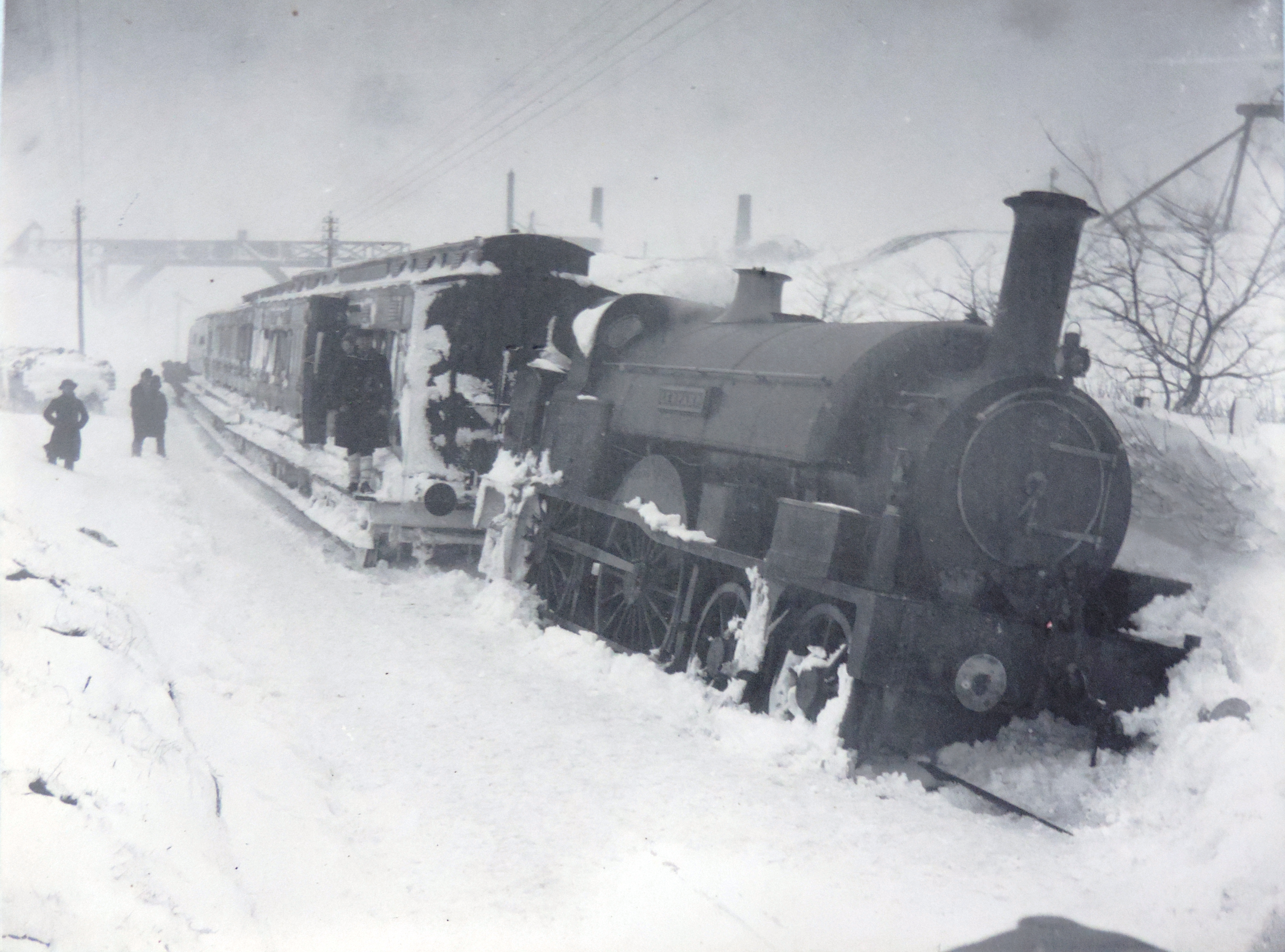
A friend who lives in Devon, England, remined me this week of a storm that hit Southwest England almost 128 years ago, between 9 and 13 March 1891, called the Great Blizzard of 1891 (Aren’t they all often called Great?). It was wonderfully described in a book published the same year, titled The Blizzard in the West (downloaded from Archive.org). The wind, cold and snow killed 200 people and 6,000 farm animals as well as imperiling ships in harbours and offshore along the southern coast of England. Many vessels were wrecked and dozens of crew members were lost.

Coincidentally, my grandfather was born on 12 March 1891, in Torquay, Devon, during the height of the cold weather. In The Blizzard of the West book, the experience there was described as: “The snowstorm was more severe at Torquay than at any of the surrounding districts, the fall having been heavier than at either Teignmouth or Dawlish. Few mishaps occurred, however, and there was not any really serious damage. Railway communication with Exeter, London, and the north, was never interrupted. Some injuries to trees occurred, and a few telegraph posts were blown down, but, on the whole, Torquay sustained its reputation as a desirable winter abode.” It appears the family was not seriously inconvenienced, but one has to wonder if the stress of the weather prompted my great-grandmother to go into labour. 
Great Western Railway No. 2128 Leopard after derailing near Camborne, Cornwall on 8 March 1891; retrieved 2 February 2019 from Wikimedia https://upload.wikimedia.org/wikipedia/commons/a/aa/BASA-3K-7-518-56.jpg

In North America, the Great Blizzard of March 1888 produced snowfalls of from 10 to 58 inches, winds of more that 45 miles per hour and snowdrifts up to 50 feet in height. Areas from the Canadian Maritime provinces to Washington, D.C. More than 400 people died from the effects of the storm and the cold. Another significant storm called the Schoolhouse Blizzard, blew through the US Midwest in January of the same year and was reported in newspapers around the world.
Surface analysis of blizzard on 12 March 1888; image retrieved 2 February 2019 from Wikipedia https://en.wikipedia.org/wiki/Great_Blizzard_of_1888

My cousin wrote about a blizzard that brought misery to many of my family members in Alberta, in 1919, using information gleaned from relatives and their neighbours who lived through event. It did not make the list of worst storms in Canada, but it was exceedingly eventful to residents of Southern Alberta: “. . . to add additional strife, the spring of 1919 went into the history books when May 2nd, 3rd and 4th brought the worst spring storm to ever hit Alberta. Thousands of cattle and many horses perished. Most farmers had turned their stock out, feeling sure spring was here and when the blizzard got so bad, could not venture out to search for them. No one who experienced the May 1919 snowstorm ever forgot it. Many went about their daily chores and business in a gentle snowfall on the morning of May 2nd. Then snowfall turned into a blinding raging blizzard out of the northwest. The storm was so fierce no one dared to leave the safety of the house for two days. The sight that greeted the rural residents when the storm subsided was very sad. Large piles of cattle were buried in the snow. They had naturally crowded together for warmth and protection; all that was visible were their horns. Fence corners were piled high with dead cattle. Many head drifted with the storm and were found dead in irrigation ditches and creek beds. When the ditches were full the balance of the large herds walked over them on into other ditches or fence corners, until they were also victims of the blizzard. Those driving to their local towns on May 11th, had to drive around dead cattle and horses on the main roads. Some baby foals were hanging in the barbed wire fences. It was a very sad sight!” (Thompson Family History, by Betty Thompson, 2006).
A massive snow storm combined with an Atlantic hurricane to produce one of the most intense tempests in history: Great Appalachian Storm of 1950. I wrote about it in my Discover Genealogy blog. More than 350 people died and scores more were injured.
 
Surface weather analysis of Great Appalachian Storm on 26 November 1950; image retrieved 2 February 2019 from Wikipedia https://en.wikipedia.org/wiki/Great_Appalachian_Storm_of_1950
 
The Blizzard of 1996 was a classic nor’easter that crippled the entire east coast of the US. Several feet of snow fell in some regions with hurricane-force winds.

Satellite image of the 1996 storm system; image retrieved 2 February 2019 from Wikipedia https://en.wikipedia.org/wiki/North_American_blizzard_of_1996
 
Further back in time there were the Great Frost of 1708-09 and the Great Frost of 1739-41. Both had record low temperatures and caused great hardship across Europe. The effects of these long-lasting cold spells included drought, harvest failures and famine, notably in Ireland. There was also the Great Snow of 1717 that affected the region from Virginia to New England.
1708/1709 winter temperature anomaly with respect to 1971–2000 climatology; image retrieved 2 February 2019 from Wikipedia https://en.wikipedia.org/wiki/Great_Frost_of_1709
All of these events, and many hundreds of other similar ones as well, have impacted families over the centuries. Lives have been lost, farms and villages have been seriously impacted both economically and through physical damage.

Family historians will find reports of winter conditions and, especially, blizzards in newspapers and history books. For example, a search of the word, blizzard, on The British Newspaper Archive, resulted in 122,117 hits, almost 60% of them in the first half of the 20th century. Not all of them were referencing storms, of course, but a great enough number to enable researchers to find out if any such events affected their ancestral families.

Historical books such as The Blizzard of the West can be invaluable to the genealogist as, besides giving detailed reports of events, they often contain the names of many people who were caught up in them: those who died; those who heroically gave aid to distressed victims; and those who lived and were able to relate the stories of their experiences for readers like us.